


Pakistani Engineer Develops Robot Waitresses Using Locally Made Components
Pakistani-Built Robot Waitresses Attract Customers to Karachi Restaurant
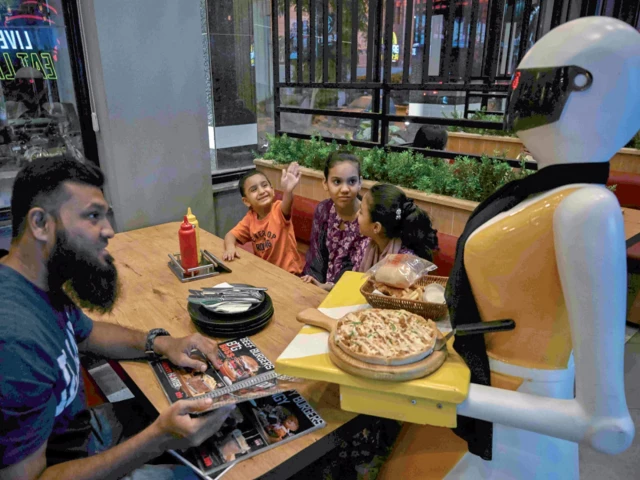
Two robot waitresses, named Rubia and Jojo, are serving customers at The Sicilian restaurant in Karachi, introducing a new experience in Pakistan’s food and hospitality industry.
According to reports by The Express Tribune and TechJuice, the robots were developed by Pakistani engineer Syed Usama Aziz, who also founded the restaurant. He designed and built them through his robotics company, Cobot, using mostly locally manufactured components alongside some imported electronic parts.
Pakistani Engineer Develops Robots Using Local Technology
Aziz designed the robots’ circuit boards himself and programmed them in his own laboratory. Friends also contributed to the development process, while the workshop where the robots are assembled is based in Multan.
However, developing the machines was not without challenges. Aziz said that the required equipment and components are not easily available in Pakistan, making it difficult to arrange the materials needed for robot manufacturing.
He explained that the team had to make special efforts to source the equipment required to build the robots.
How Rubia and Jojo Serve Customers at The Sicilian
The robots feature round white heads with dark glass panels and wear black shawls styled like traditional dupattas.
Rubia welcomes restaurant guests, introduces herself and explains the available ordering options. She then carries food to customers on a serving tray. However, customers must pick up their food themselves or wait for a restaurant staff member to assist them.
The robots combine basic customer interaction with food delivery, offering visitors an unusual dining experience.
Robot Waitresses Attract Families and Visitors in Karachi
Restaurant staff say the introduction of the robots has helped attract more customers, including visitors travelling from different parts of Karachi specifically to see them.
Families are particularly interested, with children often touching the robots while parents take photographs and selfies.
A staff member named Helen said that many visitors were seeing a robot in person for the first time.
While robotic staff are becoming increasingly common in China and other East Asian countries, their use in Pakistan’s restaurant industry remains relatively new.
Future Plans Include AI-Based Recognition and Personalised Service
Aziz plans to introduce more advanced features to improve the robots’ capabilities. He said the next stage involves adding camera-based processing and image-processing technology.
According to reports, these upgrades could allow the robots to recognise returning customers, remember their previous orders and offer personalised recommendations.
The development of Rubia and Jojo highlights the potential of locally developed robotics technology in Pakistan, particularly in the hospitality and service industries.


