


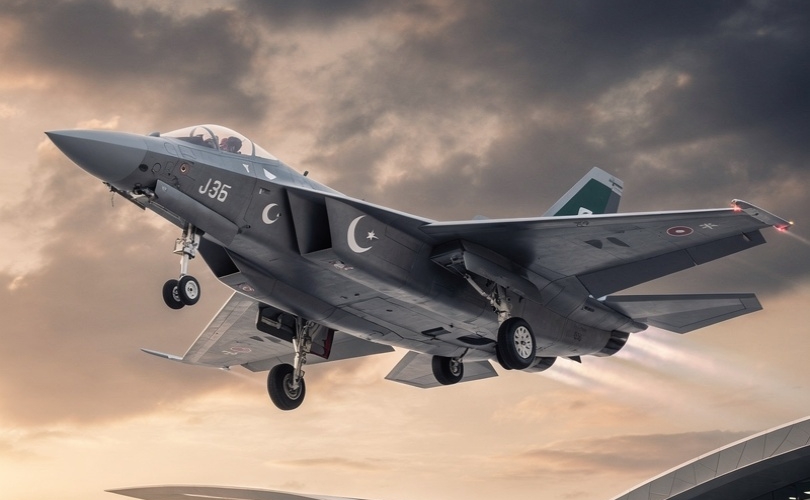
PAF Moves Toward Fifth-Generation Air Power With Chinese J-35 Agreement
Pakistan has signed an initial agreement with China to acquire the advanced Shenyang J-35 stealth fighter jet, marking the country’s first confirmed step toward fifth-generation air combat capability. The announcement was made by the Pakistan Air Force (PAF) during a press conference in Islamabad, one year after the aerial confrontation with India in May last year. PAF Deputy Chief Air Vice-Marshal Tariq Ghazi confirmed the development but did not reveal the number of aircraft or financial details of the agreement. Earlier reports indicated China had offered Pakistan up to 40 J-35 jets along with KJ-500 airborne warning aircraft and HQ-19 missile defence systems.
The PAF also announced plans to further modernize its air fleet through the induction of more Chengdu J-10C fighter jets and major upgrades to the JF-17 Thunder aircraft co-produced with China. Officials said Pakistan has additionally joined Türkiye’s Kaan fifth-generation fighter project, while also investing in next-generation technologies including hypersonic weapons and long-range precision strike systems. According to PAF officials, the JF-17 upgrades are intended to serve as a bridge toward full fifth-generation combat capability over the coming years.
Defence experts believe the induction of J-35 stealth fighters could significantly impact the balance of air power in South Asia, especially since India has not yet inducted any operational fifth-generation stealth aircraft. Analysts say the move strengthens the strategic partnership between China and Pakistan and may pressure India to accelerate its own stealth fighter plans, including possible purchases of Russian Su-57 jets. Experts also noted that Pakistan must carefully balance its growing Chinese defence ties with its relationship with the United States, particularly as Washington recently approved upgrades to Pakistan’s ageing F-16 fleet through 2040.


