


New Certification Norms Reshape India’s CCTV Market, Local Firms Gain Edge
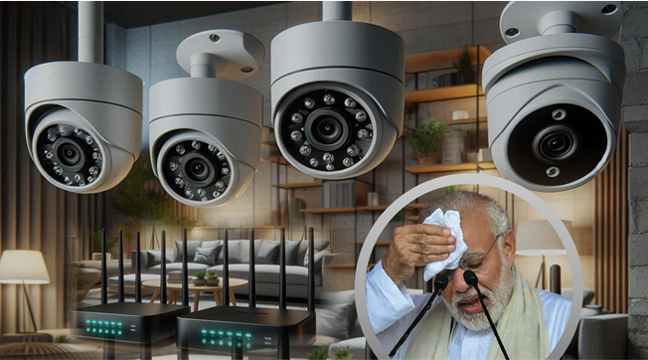
Starting April 1, the Indian government is set to restrict Chinese surveillance companies, including Hikvision and Dahua, from selling internet-enabled CCTV cameras in the country, according to a report by The Economic Times.
The move is expected to be implemented by denying mandatory certification to products manufactured by these firms or those using Chinese chipsets, effectively limiting their presence in India’s surveillance market.
Supernet Technologies Completes Post-Merger Share Allotment
The action stems from the Essential Requirements guidelines introduced by the Ministry of Electronics and Information Technology in April 2024. Under this framework, manufacturers were given a two-year transition window to ensure all CCTV products are tested and approved under the Standardisation Testing and Quality Certification (STQC) system via authorized laboratories.
As part of the regulations, companies must disclose the country of origin for critical components such as the System-on-Chip (SoC), while devices must pass stringent cybersecurity checks to prevent unauthorized remote access.
So far, only a limited number of CCTV models have secured certification, reflecting the strict nature of the approval process. Industry sources indicate that several Chinese firms have either restructured their supply chains or begun exiting the Indian market. Dahua, once a major player, is now reportedly confined to selling analogue cameras.
The impact has extended beyond surveillance firms. Smartphone brands like Xiaomi and Realme have exited the smart home camera segment after failing to meet compliance standards.
In contrast, domestic companies such as CP Plus, Qubo, Prama, Matrix, and Sparsh have adapted by shifting to Taiwanese chipsets and developing local firmware, positioning themselves to benefit from the evolving regulatory landscape.


