


China unveils world’s fastest hard drive. Is ‘Poxiao’ the dawn of new flash memory?
Rice-sized memory device breaks speed barrier once thought impossible, capable of erasing and rewriting data 100,000 times faster than before
In a world fixated on the race for superior artificial intelligence (AI), Chinese scientists have cracked the code to memory speeds once deemed impossible – with a device smaller than a grain of rice.
Researchers at Fudan University on Thursday unveiled “Poxiao”, or Dawn, the fastest flash memory ever created, which can erase and rewrite data in 400 picoseconds. One picosecond is one trillionth of a second.
Rice-Sized Marvel: Fudan University Scientists Revolutionize Data Storage
While the existing prototype holds only kilobytes – barely enough to display this story – its revolutionary design shatters the speed barriers of modern storage by 100,000 times, promising a future where AI brains can read and write as fast as they think.
Do you have questions about the biggest topics and trends from around the world? Get the answers with SCMP Knowledge, our new platform of curated content with explainers, FAQs, analyses and infographics brought to you by our award-winning team.
Published in the journal Nature, this leap in electron physics may soon blur the line between memory and computing.
Dawn of a New Era: ‘Poxiao’ Promises AI Memory Speeds Beyond Imagination
Overcoming the limits of information storage speed has long been one of the most fundamental challenges in the integrated circuit field, and it is also a key technical bottleneck restricting the potential of AI computing power.
Existing storage architectures come with stubborn limitations. While volatile memory – like SRAM and DRAM – offers high speeds, it suffers from low capacity, high power consumption, high manufacturing costs, and data loss when power is cut. Non-volatile memory – like flash storage – offers larger capacity, lower power consumption, and data persistence, but lags far behind in speed.
The research team aimed to accelerate flash memory – harnessing its advantages while addressing its speed limitations.
The basic storage unit of flash memory is a floating-gate transistor, in which electrons move in and out of a charge storage space under the influence of voltage, enabling data recording. “In the past, the approach to speeding up flash memory involved pre-accelerating the electrons, allowing them to gain energy before entering and exiting,” project leader Liu Chunsen said in a statement from Fudan University.
But under traditional theoretical models, this “warm-up” process is slow, and there is a speed ceiling, preventing flash memory from exceeding theoretical speed limits.
“It’s been 60 years since Bell Labs introduced the floating-gate transistor. If we had just stuck with traditional theories or relied on material changes, we wouldn’t have made any major breakthroughs. That is why we have focused on developing a completely new approach to flash memory,” Liu said.
The researchers introduced a new approach to accelerate flash memory, allowing electrons to directly transition from a low-speed to a high-speed state without the need for a “warm-up” phase. This new theory – called “2D-enhanced hot-carrier injection” – led to the development of a prototype device.
In tests, the erase-write speed reached 400 picoseconds, surpassing the world’s fastest volatile memory, SRAM, at the same technology node. Compared to the hundreds of microseconds of ordinary flash memory, the speed improved by more than 100,000 times.
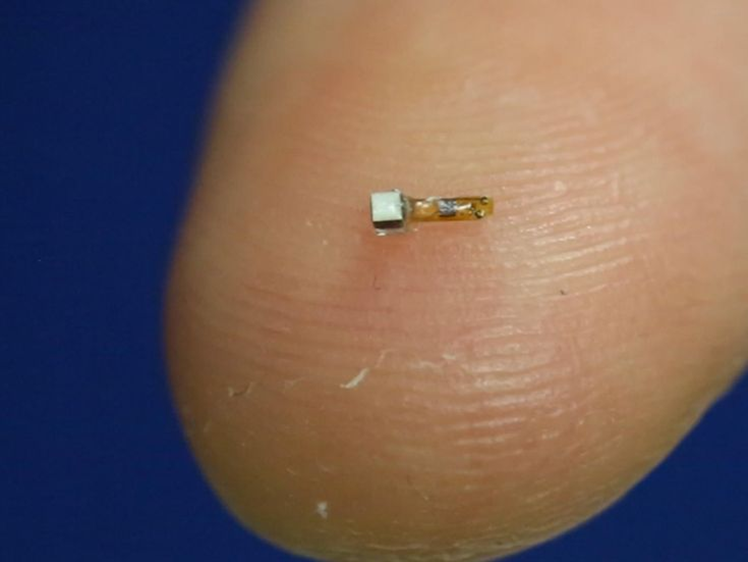
According to an article on Fudan University’s website, it is the world’s fastest semiconductor storage technology to date, achieving equal storage and computation speeds. “Once scaled up for mass integration, it is expected to completely disrupt the current storage architecture,” the article said.
“Based on this technology, future personal computers may no longer need to differentiate between memory and external storage, eliminating the need for hierarchical storage systems, and enabling the local deployment of large AI models,” the report added.
The team began researching flash memory devices in 2015. In 2021, they proposed an initial theoretical model, and last year, they developed a superfast flash memory device with an 8-nanometre channel length, surpassing the physical size limit of silicon-based flash memory, which was around 15 nanometres.
The “Poxiao” flash memory device is now moving towards production. Combined with CMOS technology, the chip has already been successfully fabricated at the kilobyte level.
Within five years, the team hopes to scale it to tens of megabytes and have it licensed and ready to market.
This article originally appeared on the South China Morning Post (www.scmp.com) – Copyright (c) 2025. South China Morning Post Publishers Ltd. All rights reserved.
- TECNO CAMON 50 Pro Launched in Pakistan with AI 60X Super Zoom, FlashSnap & Underwater Photography
- Meezan Bank Accelerates Instant Payment Solutions Amid Surge in Digital Transactions in Pakistan
- Digital economy could contribute up to 7pc to GDP by 2030, highlights OICCI’s latest Digital Report
- HBL Pakistan Manufacturing PMI fell to 52.9 in March
- PTEA Applauds Sindh Govt for Exempting EFS Imports from Infrastructure Cess


