


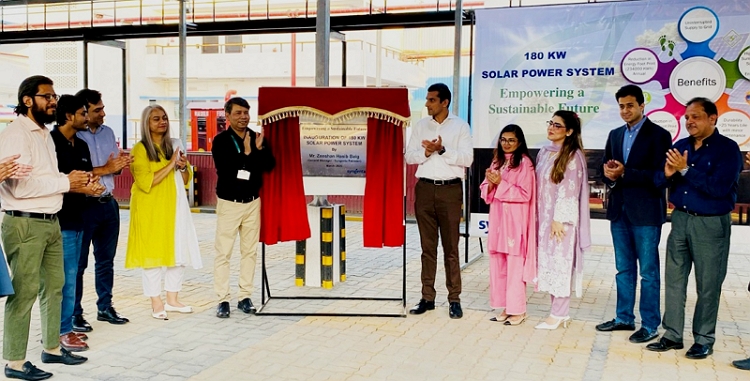
Syngenta Pakistan has recently installed a Solar Energy Plant at its factory, to produce over 300KW of solar energy
Karachi: Syngenta is a globally-leading ‘plant-science’ company, committed to promoting sustainable agriculture through innovation, research and technology, while it also has a long-term vision for environmental sustainability. Hence, Syngenta Pakistan has recently installed a Solar Energy Plant at its factory, to produce over 300KW of solar energy.
To reaffirm the company’s commitment to sustainable business practices and reduce the GHG emissions, Syngenta, Pakistan has embarked on a mission to convert their manufacturing facility in Karachi and their warehouses across the country, including Lahore, Multan and Rahimyar Khan onto solar energy. This initiative will bring down the operational cost by providing a renewable source of green-energy.
The Country General Manager of Syngenta Pakistan – Zeeshan Baig addressed the stakeholders at the inaugural ceremony of the new solar energy system at Syngenta’s plant in Karachi, and stated that: “This is an important milestone for Syngenta, Pakistan to be converting its manufacturing facility onto Solar Energy. As a responsible corporate entity Syngenta Pakistan is committed to playing its part in ensuring sustainable growth, as it is fully aligned with Syngenta Group’s global sustainability vision.”
The global objective of Syngenta is to help feed a growing population, by bringing plant potential to life, while it also aims to reduce the intensity of its carbon footprint by 68 percent, based on value-added by 2030, compared to the 2016 baseline. This target is consistent with reductions, required to limit global warming to well below 2°C compared to pre-industrial levels.
Syngenta’s supply-chain accounts for about 90 percent of its total carbon footprint
Syngenta’s supply-chain accounts for about 90 percent of its total carbon footprint, while 10 percent of emissions come from the company’s operations. To achieve the 2030 carbon intensity reduction target, it is focusing on improving the efficiency of its manufacturing processes, designing and implementing site-based energy-saving programs. Thus, increasing the share of renewable sources of energy. It is also partnering with its crop-protection and seed suppliers to reduce their carbon-footprint.
More than a decade ago, Syngenta Group was one of the first companies in the industry to launch a plan that served as the organization’s sustainability compass. With the global population on track to reach 9.7 billion by 2050, farmers need to grow more food, while reducing their impact on the environment and safeguarding natural resources. The environmental sustainability requirements outlined in the HSE Code of ‘Practice on Environmental Sustainability’ ensure that Syngenta operations are aware of their resources usage and implement programs to conserve natural resources, minimize environmental impact, and adopt more sustainable practices, including the reduction of greenhouse gas emissions and optimization of logistics network.
- TECNO CAMON 50 Pro Launched in Pakistan with AI 60X Super Zoom, FlashSnap & Underwater Photography
- Meezan Bank Accelerates Instant Payment Solutions Amid Surge in Digital Transactions in Pakistan
- Digital economy could contribute up to 7pc to GDP by 2030, highlights OICCI’s latest Digital Report
- HBL Pakistan Manufacturing PMI fell to 52.9 in March
- PTEA Applauds Sindh Govt for Exempting EFS Imports from Infrastructure Cess


