


Pakistan’s Electric Future: BYD Leads the Charge with Super DM Plug-in Hybrid Tech
Karachi – As Pakistan progressively aligns with global trends in transitioning away from internal combustion engine (ICE) vehicles, the world’s leading Plug-in Hybrid Electric Vehicle (PHEV) brand, BYD, has introduced its cutting-edge technology to the country. The government’s New Energy Vehicle (NEV) policy, designed to reduce carbon emissions and enhance urban air quality, has already paved the way for electric mobility, attracting increasing interest from global manufacturers who view Pakistan as a burgeoning market.
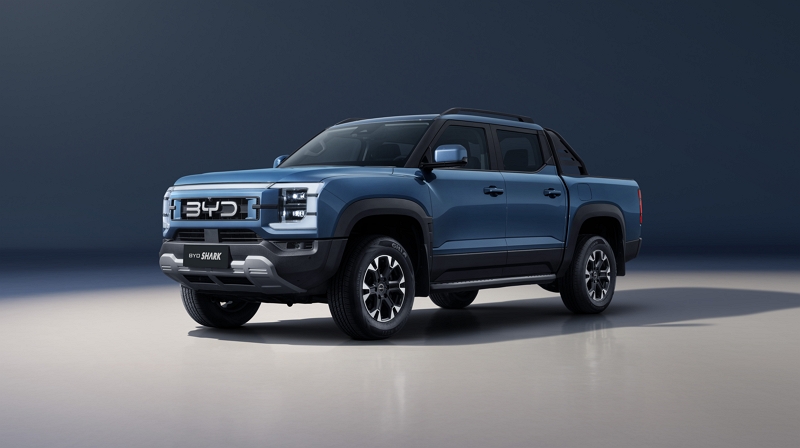
A significant stride in this direction was marked by BYD Pakistan – Mega Motor Company, which became the first automotive player to initiate a focused conversation on PHEVs. At a recent experiential workshop in Karachi, the company invited automotive experts, media representatives, and industry stakeholders to showcase its Super DM Plug-in Hybrid Technology platform. The BYD Shark 6 PHEV pickup served as the spotlight vehicle, marking its formal introduction to the local market as a stepping stone towards wider electric vehicle adoption.
Also read: Yutong Delivers 110 Luxury Buses to Saudi Aramco, Marking New Expansion Milestone
BYD’s proprietary Dual Mode (DM) Super Hybrid platform stands out from traditional hybrids.
Instead of simply combining electric and petrol power, this system prioritizes electric drive, with the engine functioning primarily as an efficient range extender. This design allows the vehicle to behave more like a pure EV for most driving conditions, while providing the assurance of fuel for extended journeys. According to Lei Jian, Country Head of BYD Pakistan, this Dual Mode architecture has been under development for over two decades. “We launched the world’s first mass-produced PHEV back in 2008,” Jian shared. “With a vertically integrated supply chain and constant R&D, we’ve built a platform that’s both intelligent and efficient. The engine only activates when it’s needed, making long-distance travel stress-free.”
The system, which BYD introduced globally with the F3DM, the world’s first mass-produced PHEV, has undergone over 20 years of continuous development. Under the Super Dual Mode Hybrid Platform, the vehicle combines a large-capacity power battery with a high-efficiency Xiaoyun 1.5L naturally aspirated engine, which offers an industry-leading thermal efficiency of 46.06%*, a benchmark among mass-produced hybrid engines.
Participants were also given an in-depth look at the technological components of the system, including the Blade Battery, a proprietary battery unit developed in-house by BYD for higher safety, longevity, and thermal stability. Integrated into BYD’s Electric Hybrid System (EHS), the platform delivers fast power response and near-instant torque, creating a smooth driving experience as a pure EV.
The BYD Shark 6, introduced not just as Pakistan’s first PHEV pickup but also a category-defining product. The pickup delivers a combined range of 800 kilometers and fuel efficiency of up to 50 kilometers per liter (Combined fuel consumption – SOC 25%-100% (km/l)) through a 29.58 kWh battery delivering 436 HP and 650 Nm of torque, making it the fastest, most powerful pickup in the local market.
Danish Khaliq, Vice President Sales and Strategy at BYD Pakistan, explained how PHEVs redefine the hybrid driving experience.
“This isn’t about incremental improvement, it’s a leap,” he said. “The electric motor does the heavy lifting. The combustion engine exists to support, not lead. That distinction changes the entire driving dynamic, especially for urban users who are increasingly looking for smarter and cleaner options.”
Also read: vivo Pakistan Teases X200 FE: Compact Flagship with Big Camera Power
He further highlighted that the fundamental difference between PHEVs and traditional hybrids (HEVs) is that while HEVs rely mainly on the petrol engine and recharge their batteries through their engine or by regenerative braking, PHEVs come equipped with a larger battery that can be charged externally. This allows them to offer both greater fuel efficiency and environmental benefits without compromising range. They also provide the capability to drive solely on the battery, with an extended range, operating as a pure electric vehicle.
In terms of real-world application, the BYD Shark 6, which uses the Dual Mode off-road (DMO) plug-in hybrid platform, can cut tailpipe CO₂ emissions by as much as 62%*, a notable figure in congested cities like Karachi and Lahore, where transport emissions dominate the smog equation. Beyond its environmental benefits, the vehicle also delivers an exceptional driving experience for adventure seekers with multiple terrain modes, including Mud, Snow, and Sand, ensuring complete control across diverse landscapes.
While the Shark 6 was the centerpiece during the event, the larger focus remained on how PHEVs could play a transformative role in Pakistan’s mobility ecosystem. These vehicles are bound to offer a transitional route for consumers seeking a balance of performance, sustainability, and cost-effectiveness.
The workshop served as a precursor to a broader shift in the local automotive conversation, away from legacy models and toward cleaner alternatives. As one panelist aptly put it, “This is not just about introducing a vehicle; it’s about introducing a mindset.”
With BYD positioning Pakistan as a key regional market and setting up its local production plant, the groundwork is being laid for a future where plug-in hybrid electric vehicles serve as a key option for widespread NEV adoption in the country.
You might also like
- Airblue Launches New Islamabad–Dammam Route with Inaugural Ceremony
- MG Pakistan Unveils MG U9 as a ‘True Luxury Off-Roader’
- BYD Participates in COP30, Contributing a 130-Vehicle New Energy Fleet in the Amazon
- REVOO Unveils New Lithium-Battery EV Lineup at PAPS AUTOSHOW 2025
- BYD partners with Pakistan’s first World Athletics–Certified Karachi Marathon


